Course Program Overview
Enterprise DataOps, MLOps & LLMOps Bootcamp: AI Systems Architect
- Duration: 4 Months
- Format: Live Online / Classroom / Blended / Corporate
- Sessions: 5 per week
- Session Length: 1 Hour each
- Tech Stack: VS Code Enterprise Workspaces, Jupyter Labs, Docker Desktop, Linux Terminals, LocalStack Cloud Emulation, MLflow Server, MinIO Object Storage, DuckDB, Trivy, PostgreSQL, Qdrant, Prometheus, Grafana, LangChain.
- Outcome: Production-grade local-to-cloud portfolio + Technical System Runbooks + Certification
Become a AI & cloud Expert
Our placement Record
Become an AI Infrastructure & Cloud Expert
Explore the frontier of automated AI infrastructure with this 4-month professional specialisation designed for engineers, cloud architects, and technology leaders. The curriculum is rooted in production engineering, focusing on emerging operational paradigms, next-generation deployment pipelines, and scalable cloud-native architectures.
Learners dive into version-controlled data pipelines, containerized microservices, foundation model operationalization, vector database orchestration, and large language model systems—while also mastering automated CI/CD frameworks and cloud monitoring strategies used to deploy intelligent systems at scale. The program emphasizes reproducible software workflows, isolated experimentation environments, and architecture-level design for future-proof enterprise solutions.
By combining rigorous software engineering theory with hands-on labs and live deployment environments, this course prepares professionals to contribute meaningfully to the evolution of operational artificial intelligence—from data pipeline creation to enterprise-grade model governance.


🎯Why Choose Us
-
Deep Infrastructure Mathematics:
Calculus, probability, linear algebra, optimization theory, and algorithmic scaling metrics. -
Algorithm-Centric Pipeline Programming:
Pure Python scripting, custom ETL automation, environment sandboxing, and local cluster architectures. -
Career-Built Curriculum:
Engineered directly for high-tier enterprise MLOps, DataOps, and Cloud Engineering roles. -
Thought Leaders as Mentors:
Live code reviews within VS Code, GitHub portfolio staging, resume optimization, and engineering runbook guidance.

Build AI. Don’t Just Use It.
Join the only AI & ML course that teaches you the math, programming, and mindset behind ₹1 crore+ careers.
Why Choose Us
- Deep Mathematics: Calculus, probability, ability linear algebra, optimization
- Algorithm-Centric Programming: Python, TensorFlow, custom architectures
- Career-Built Curriculum: Designed for ₹1 crore+ AI roles
- Thought Leaders as Mentors: Resume coaching, GitHub setup, interview prep
Can You Crack This AI Math Challenge?
Solve for the gradient
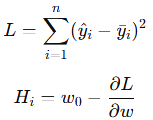
Where exact behind how ChatGPT ables.
Your ₹1 Crore Career Starts Here.
Your ₹1 Crore Career Starts Here.
Who’s Hiring AI/ML Experts?
We design our training programs around real-world demand — here's who’s building with AI:
Tech & Cloud Leaders
Google · Microsoft · Amazon · Meta · Apple · IBM · NVIDIA
Scaling enterprise AI, cloud services, and generative technologies
AI Research & Platforms
OpenAI · DeepMind · Hugging Face · Anthropic · Cohere
Pioneering large language models, multimodal learning, and democratized AI
Industrial & Robotics AI
Tesla · Waymo · Boston Dynamics · ABB
Deploying autonomous systems for mobility, automation, and smart infrastructure
Consulting & Strategy
Accenture · PwC · Deloitte · EY · Palantir
Leading AI adoption and transformation for Fortune 500 clients
Finance & Fintech
JPMorgan · Goldman Sachs · Capital One · Stripe
Revolutionizing risk modeling, fraud detection, and customer intelligence
Media & Digital Productivity
Netflix · Spotify · Zoom · Notion · LinkedIn
Enhancing personalization with recommendation engines and content intelligence
Skills You Will Get
Over the 4-month journey, you'll master essential skills in infrastructure automation, system orchestration, and cloud optimization using Python, Docker, Kubernetes, and real-time observability frameworks. You’ll complete industry-relevant projects such as automated feature stores, continuous delivery pipelines, and cloud-based LLM architectures with real-time health dashboards.
40+ Open-Source Tools
40+ Open-Source Tools
30+ Real-Time Projects
30+ Real-Time Projects
DataOps Engineering
DataOps Engineering
Core MLOps Lifecycles
Core MLOps Lifecycles
Cloud Infrastructure Emulation
Cloud Infrastructure Emulation
Generative AI & LLMOps
Generative AI & LLMOps
Local Application Isolation
Local Application Isolation
SRE & Production Observability
SRE & Production Observability
Course Program
Classroom / Live Online: 4 Months (120+ Hours)
This expert diploma offers an immersive 4-month journey into the world of cloud-based AI infrastructure, automated data pipelines, and generative AI operations. Through a blend of live sessions, technical workshops, and hands-on deployment labs, learners gain practical mastery over tools like Docker, Kubernetes, GitHub Actions, MLflow, LangChain, and vector indexing platforms across AWS, Azure, and Google Cloud.
The curriculum spans from foundational DataOps scripting to cloud microservices, NLP deployment, and LLM fine-tuning pipelines, culminating in real-world system rollouts and industry-grade capstone projects. Learners build production architectures for high-scale enterprise environments—using state-of-the-art techniques such as automated drift detection, semantic search orchestration, and security guardrails.
Graduates emerge with the deep skills, structural portfolio, and live cloud deployment experience required to lead high-impact AI infrastructure initiatives across global industries.
● Month 1
Foundations of DataOps, Applied Mathematics, and Ingestion Pipelines
- Executive Summary
Establish the analytical, mathematical, and programmatic groundwork required to build highly reliable, version-controlled, and automated data pipelines. This module replaces manual data preprocessing with scalable, algorithm-driven DataOps engineering executed inside VS Code and Jupyter Notebook environments.
- Core Focus Areas
- Mathematical Optimization Engines: Coding matrix transformations, multivariate calculus gradients, and cost functions from scratch in pure Python.
- VS Code Advanced Workspace Configuration: Setting up decoupled virtual environments, debugging extensions, and local configuration environments (.env).
- Algorithmic Ingestion Scripting: Programmatic extraction across open relational databases (PostgreSQL) and NoSQL layers using terminal drivers.
- Memory-Optimized Local Computing: Utilizing DuckDB and PyArrow within VS Code to execute SQL transformations on massive datasets without overflowing system RAM.
- High-Throughput File System Storage: Engineering distributed file serialization and local caching layers with Parquet and Avro storage schemas.
- Automated Ingestion Schema Enforcement: Writing automated data validation functions to intercept data anomalies and data type mismatches.
- Statistical Data Profiling & Cleaning: Building custom data validation layers to handle missing data and flag distribution outliers automatically.
- Data Versioning Mechanics: Implementing file-level dataset snapshots using open versioning patterns to secure historical pipeline tracking.
- Feature Store Mock Architectures: Structuring a local, high-speed feature caching registry for instantaneous data retrieval during execution.
- Month 1 Premium Summary
- Skills You Get: Python pipeline automation, low-memory massive dataset manipulation via DuckDB, multi-source open database ingestion, programmatic data profiling, localized feature registry design, and structural file-level version control inside VS Code.
- Training Methodics & Tasks: 25+ Comprehensive Technical Lectures, 20+ Immersive Lab Sessions, and 12 Practical Assignments. Key milestones include coding a custom mathematical optimization gradient and deploying an active, terminal-verified ETL data pipeline engine.
● Month 2
Core MLOps, Containerization, and Continuous Integration Infrastructure
- Executive Summary
Transition code from exploratory Jupyter Notebooks into decoupled, production-grade microservices. This module covers application sandboxing, automated unit configuration testing, local cluster container orchestration, and automated integration tracking.
- Core Focus Areas
- Application Isolation & Custom Image Building: Writing optimized multi-stage Dockerfiles inside VS Code to securely package isolated AI models.
- Multi-Container Environment Orchestration: Managing dependent database and model serving layers using Docker Compose networks.
- Container Security Scanning: Integrating open-source static vulnerability scanners (Trivy) inside the VS Code terminal to inspect base images for security vulnerabilities before packaging.
- Local Kubernetes Cluster Deployment: Provisioning and configurations of local cluster layers (Minikube/Kind) directly via the VS Code shell terminal.
- Automated Local CI/CD Pipeline Tracking: Scripting automated testing configurations that validate code, verify linting standards, and compile images automatically.
- Self-Hosted Experiment Tracking Servers: Launching and instrumenting code with a localized, detached MLflow tracking server to centralize parameter logging.
- Model Registry State Governance: Programmatically transitions artifact phases (Staging, Production, Archived) within a unified tracking dashboard.
- Declarative Infrastructure as Code (IaC): Writing local declarative environment manifests to ensure matching deployment baselines across clusters.
- Model Interpretability Configurations: Embedding automated explainability layers (SHAP/LIME scripts) within production serving loops.
- Month 2 Premium Summary
- Skills You Get: Advanced Docker microservice engineering, open-source container vulnerability auditing, local Kubernetes infrastructure orchestration, declarative testing script development, automated metric tracking, and local isolated deployment management.
- Training Methodics & Tasks: 25+ System Architecture Lectures, 25+ Interactive Technical Workshops, and 15 Real-World Staging Deployment Projects. Key milestones include building an autonomous terminal pipeline that packages, tests, and serves an ML microservice upon local code check-in.
● Month 3
Multi-Cloud AI Orchestration, Generative AI Systems, and LLMOps
- Executive Summary
Scale isolated container microservices into cloud-emulated environments and deploy next-generation generative AI frameworks. This module targets the unique memory footprint, token constraints, and performance metrics of Large Language Models.
- Core Focus Areas
- Open Cloud API Emulation: Simulating enterprise remote cloud model serving layers locally using open emulation layers like LocalStack.
- Open-Weight Transformer Orchestration: Running, caching, and serving open-source foundation architectures locally using Hugging Face pipelines.
- Retrieval-Augmented Generation (RAG) Foundations: Engineering document parsing pipelines using text-splitting filters and structural chunking strategies.
- Vector Database Local Management: Setting up and querying self-hosted vector database engines (Chroma/Qdrant) inside multi-container networks.
- LangChain Enterprise Application Stitching: Building reliable logic flows combining system prompt matrices, custom utility tools, and model endpoints.
- Prompt Version Control & Management: Handling prompts as code by versioning, matching, and maintaining prompt files inside VS Code git workspaces.
- Operational LLM Metric Tracing: Tracking execution parameters including context-window limitations, prompt-response latency, and compute memory bottlenecks.
- Generative Output Filtering & Safety Guardrails: Writing regex and algorithmic filters to trap hallucinated results, protect system instructions, and handle non-deterministic output errors.
- Month 3 Premium Summary
- Skills You Get: Cloud API emulation engineering, open foundation model lifecycle orchestration, prompt versioning as code, isolated semantic search design, vector infrastructure indexing, and automated generative validation scripting.
- Training Methodics & Tasks: 25+ Cloud Infrastructure Lectures, 30+ Dedicated Cloud Automation Labs, and 1 Enterprise-Grade LLMOps Framework Capstone. Key milestones include building and executing a live, fully functional RAG chatbot application running inside your local VS Code container network.
● Month 4
Capstone Projects, Continuous Monitoring, and Enterprise AI Governance
- Executive Summary
Synthesize all individual DataOps, MLOps, and LLMOps concepts into an autonomous, self-healing, and fully audited local enterprise software production environment. This module focuses on live ecosystem telemetry, data profiling shifts, and technical system runbooks.
- Core Focus Areas
- Live Telemetry & Telemetry Infrastructure: Building open-source data dashboards (Prometheus & Grafana) to observe runtime traffic loads and container CPU memory metrics.
- Data & Concept Drift Validation Testing: Automation of testing background workers to calculate mathematical distribution changes between reference baselines and live payload data.
- Self-Healing Deployment Rollback Architectures: Designing container traffic routing rules to support instant rollbacks and automated container fallbacks when container exit codes fail.
- Local Network Access Mocking: Using self-signed SSL certificate configurations inside VS Code to securely mock encrypted HTTPS endpoints within your local container network.
- System Networking & Container Connection Debugging: Using terminal networking tools inside VS Code to isolate cluster connectivity faults and solve broken container routing loops.
- Enterprise Identity & Access Configuration: Enforcing Role-Based Access Control (RBAC) schemas and data masking scripts across API endpoints.
- Auditable Security Logging Governance: Logging metadata access timestamps and API payloads to satisfy enterprise system audit compliance policies.
- Technical Portfolio Handover Optimization: Packaging your repository code with exhaustive architectural runbooks, initialization shell scripts, and complete parameter matrices.
- Month 4 Premium Summary
- Skills You Get: Production environment observability architecture, mathematical data drift analysis, terminal-based network cluster debugging, local self-signed encryption network orchestration, self-healing rollback deployment strategy, network access restriction, and enterprise documentation blue-printing.
- Training Methodics & Tasks: 15+ Guided Production Case Studies, 1 Major End-to-End Enterprise Capstone Blueprint, and 1 Live Cloud-Deployed Portfolio Showcase. Key milestones include delivering a fully operational, integrated DataOps + MLOps + LLMOps automated workspace from your master GitHub configuration repository.
Real Roles. Real Results.
Explore Your Post-Course Career
After completing the course, learners can unlock high-impact roles such as Machine Learning Engineer, Cloud Solutions Architect, Data Scientist, and AI Product Lead—across sectors like technology, BFSI, healthcare, retail, and manufacturing.
Machine Learning Engineer
Designs, trains, and optimizes ML models for prediction, classification, and automation across industries like finance, healthcare, and manufacturing.
Data Scientist
Extracts insights from structured and unstructured data using statistical analysis, visualization, and modeling techniques. Drives decision-making and business intelligence.
AI Solutions Architect
Leads the design and deployment of scalable AI systems using cloud platforms, MLOps pipelines, and enterprise-grade frameworks
Deep Learning Researcher
Specializes in neural networks, CNNs, RNNs, GANs, and transformers. Builds models for image recognition, NLP, and generative tasks.
MLOps Engineer
Implements CI/CD pipelines, containerization, and cloud-native deployment for AI models. Ensures reliability, scalability, and performance monitoring.
Generative AI Developer
Builds intelligent applications using LangChain, Hugging Face, and LLMs. Applies RAG pipelines and transformer models to domains like legal tech and marketing.
Computer Vision Engineer
Develops image and video analysis systems using OpenCV, TensorFlow, and deep learning. Works on facial recognition, object detection, and OCR.
NLP Engineer
Creates language models and conversational AI systems using NLTK, SpaCy, and transformers. Powers chatbots, sentiment analysis, and document summarization.
AI Product Lead
Bridges technical teams and business strategy. Oversees AI product lifecycle—from ideation to deployment—ensuring alignment with market needs and ethical standards.
Our Clients








- Client Testimonials
What Our Clients Say
We were impressed by the depth of expertise and the premium quality of Adian’s curriculum. Our analysts now use cloud-native AI pipelines daily, and the impact on our retail insights has been phenomenal. Truly a future-ready partner.
David Lee, Head of Data Science NextGen Retail AnalyticsAdian’s AI/ML training helped us build an internal team capable of designing healthcare-focused AI assistants. Their structured approach, combined with placement support, ensured our staff were industry-ready in record time.
Dr. Ananya Rao, Director of Innovation MedAI HealthcareThe strategic guidance and career pathway mapping provided by Adian stood out. Our employees not only learned cutting-edge AI and cloud techniques but also understood how to position themselves globally. This is premium education at its best.
Michael Johnson, VP of Engineering FinEdge SolutionsAdian Solutions has consistently delivered cloud talent that is project‑ready from day one. Their Professionals demonstrate mastery across AWS, Azure, and Google Cloud, with the rare ability to integrate AI workloads into enterprise environments. We’ve onboarded ...
Director of Cloud Engineering Global Technology FirmIn the financial sector, compliance and security are non‑negotiable. Adian’s training programs stand out because they embed FinOps, governance, and zero‑trust security into every module. The professionals we hired from Adian Solutions were able to optimize ...
VP, Cloud Security & Compliance International BankWe needed engineers who could deploy AI models securely on hybrid cloud infrastructure. Adian Solutions graduates not only understood the technical stack but also the industry context. Their ability to integrate Kubernetes, serverless, ...
CTO Healthcare AI StartupAdian Solutions is one of the rarest training providers that truly combines cloud computing with AI. Their alumni are not just certified — they are capable of architecting enterprise‑grade solutions across vendors. This makes them invaluable in consulting engagements ...
Partner, Cloud Advisory Practice Big Four Consulting FirmBlogs and Insights
Hello world 3
Welcome to WordPress. This is your first post. Edit or delete it, then start writing!
Hello world 2
Welcome to WordPress. This is your first post. Edit or delete it, then start writing!

Hello world!
Welcome to WordPress. This is your first post. Edit or delete it, then start writing!
Partnering with Adian Soft Solutions transformed our AI adoption journey. Their training programs gave our team the confidence to deploy advanced ML models in production. The hands-on labs and real-world case studies were game changers.
Priya Sharma, CTO Global Tech Innovators